Product Ads That Communicate Benefits Clearly: How to Turn Features into High-Converting Visuals
The Feature Trap in Direct-to-Consumer Advertising
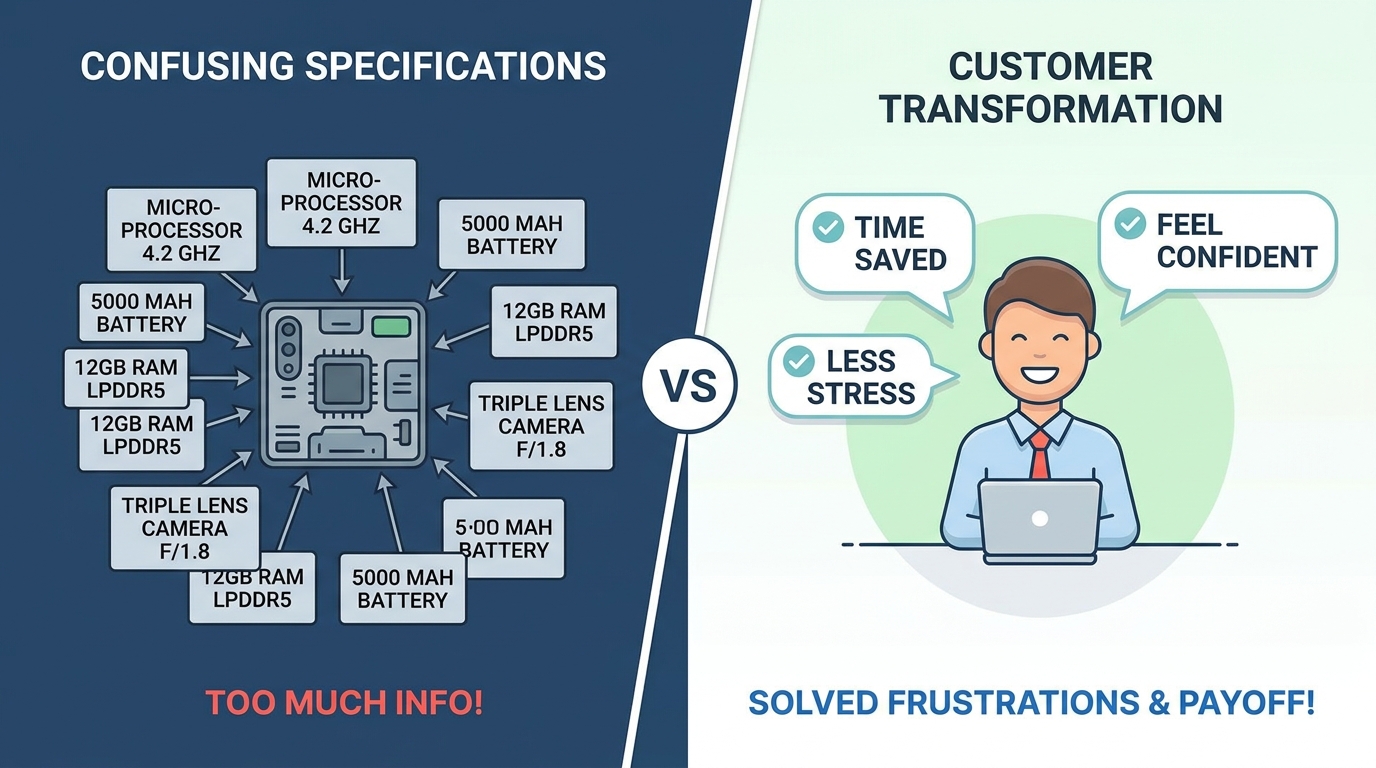
Founders and product developers fall in love with their product's engineering: 'Engineered with 320 GSM ring-spun cotton', 'Contains 15% hyaluronic acid with tri-peptide complex', or 'Features a 4000mAh dual-cell lithium battery'. When creating ads, they plaster these technical specifications across the visual.
To a potential customer scrolling their phone while standing in line for coffee, these numbers mean nothing. The shopper does not want 320 GSM cotton; they want a hoodie that feels like a warm hug and never shrinks in the dryer. They do not want tri-peptides; they want their dry forehead wrinkles to look smooth before tomorrow's zoom meeting.
If an ad requires the viewer to intellectually calculate why a feature matters to their life, the ad has already failed. You must translate the feature into an immediate, unmistakable visual benefit.
The Feature-to-Benefit Visual Translation Framework
| Product Category | Technical Feature (Boring) | Consumer Benefit (Compelling) | Visual Ad Translation (High-ROAS) |
|---|---|---|---|
| Travel Apparel | 100% Recycled Poly-Spandex Blend | Never wrinkles in your carry-on luggage | Garment balled tightly in a fist, then shaken out totally wrinkle-free |
| Kitchen Cookware | 5-Ply Bonded Ceramic Coating | Wipes clean in 3 seconds without scrubbing | Split image: sticky burnt cheese wiping clean with a single paper towel swipe |
| Wireless Audio | IPX7 Water Resistance Rating | Sweat and torrential rain won't ruin your run | Earbuds drenched under a steaming shower head with upbeat audio running |
| Skincare Serum | Micro-Encapsulated Retinol 0.5% | Youthful morning glow without redness or flaking | High-definition macro skin zoom under warm natural window light with 5-star quote |
| Ergonomic Furniture | High-Density Lumbar Memory Foam | No lower back stiffness after an 8-hour workday | Side profile of healthy posture in a sunlit home office with relaxed smiling worker |
3 Visual Techniques That Make Benefits Instantly Scannable
- 1. The 'Pointer Callout' Architecture: Place your clean, isolated product at center, and draw 3 to 4 delicate pointer arrows to specific zones. Each arrow terminates in a bold, benefit-driven badge (e.g., 'Never Leaks in Backpack', 'Keeps Cold 36 Hours', 'Fits Standard Car Cup Holders').
- 2. The 'Before vs After' Split Canvas: Divide the visual into two halves. The left side showcases the messy, frustrating status quo experienced with legacy alternatives; the right side showcases the calm, organized, elevated experience delivered by your product.
- 3. The Extreme Macro Proof Shot: Zoom in at 200% on the tactile craftsmanship—the reinforced double-stitched leather strap, the velvety micro-fleece lining, or the leak-proof silicone gasket. Visual quality eliminates online buying skepticism.
Designing Benefit-Driven Creatives with SocialShot
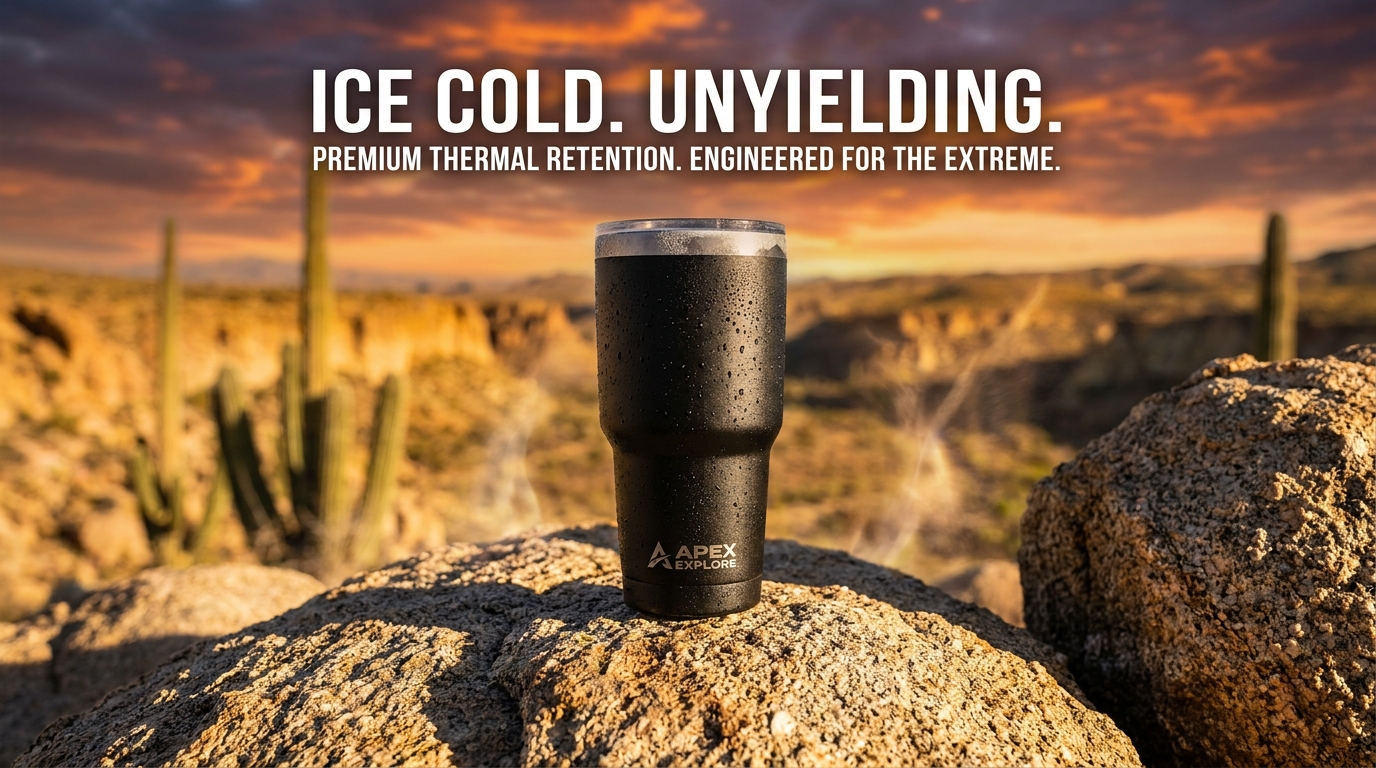
Creating benefit-driven ads used to require multi-day studio shoots with food stylists, macro lenses, and graphic designers. If you wanted to show your coffee tumbler keeping ice frozen on an outdoor camping trip, you had to travel to a mountain trail.
With SocialShot's Social Campaign Studio, brands can generate contextual benefit environments in seconds. Place your product in realistic outdoor adventures, bustling corporate offices, or luxurious home spas to visually validate your product's core value proposition instantly.
What is the difference between a product feature and a product benefit in ads?
A feature is what your product is or has (e.g., stainless steel insulation, organic cotton). A benefit is what the product does for the customer (e.g., your coffee stays steaming hot all morning, your skin stays irritation-free). Ads that highlight benefits convert significantly higher.
How many benefits should I highlight in a single static ad creative?
Focus on one primary hero benefit per ad. You can support it with 2 or 3 secondary bullet points, but attempting to highlight 7 different features in one image creates cognitive overload and confuses the buyer.
Do benefit-driven pointer ads work well on Meta and TikTok feeds?
Yes. Pointer and infographic-style ads are consistently among the top-performing creative formats on Meta Advantage+ and Pinterest because they deliver immediate educational value while the user scrolls.
How do I communicate benefits without cluttering the product image?
Ensure the product image maintains generous negative space (in the top third or side margins), and place benefit text inside clean, high-contrast pills or minimalist labels with short 3-to-5 word phrases.
Why do 'Before vs After' ads convert so effectively?
They visually dramatize the customer's emotional transformation. The customer instantly recognizes their current pain point in the 'Before' image and desires the relief shown in the 'After' image.
Can AI generate realistic environments that illustrate product benefits?
Yes. Purpose-built tools like SocialShot allow you to stage products in realistic lifestyle contexts (e.g., a waterproof boot in a muddy forest trail) that visually prove durability without expensive on-location shoots.
Turn Your Product Features into High-Converting Visuals
Create stunning benefit-driven ad creatives, lifestyle contexts, and scannable visual proof with SocialShot in minutes.