Jewelry AI Photography: Capturing Diamond Fire and Precious Metal Luster at Scale
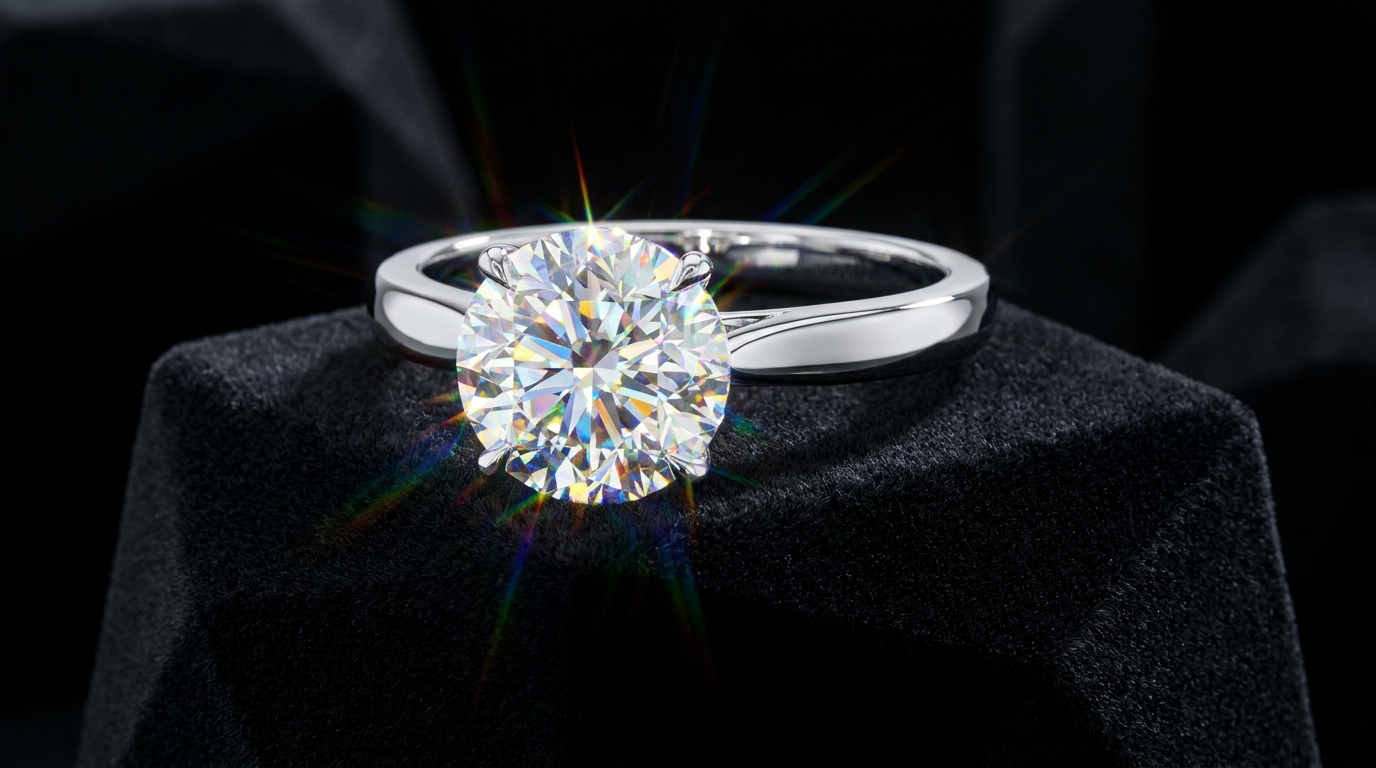
The Optical Nightmare of Photographing Fine Jewelry
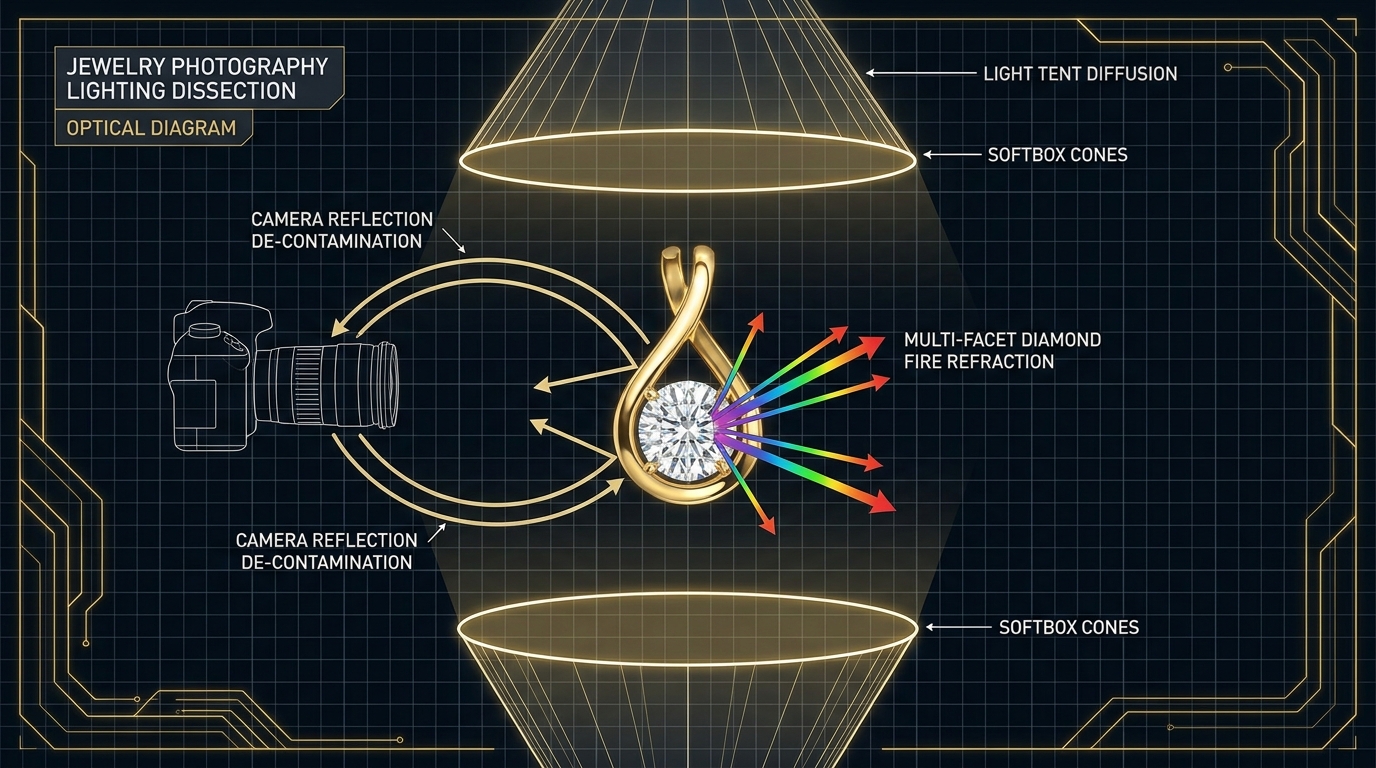
In traditional studio photography, shooting jewelry requires specialized light cones, white diffusion tents, and micro-rigging with dental wax. Because jewelry surfaces have near-100% specular reflectivity, any light source placed too close creates blown-out white hot spots, while ambient room elements show up as unsightly dark distortions in the metal.
Moreover, macro lenses have an extremely razor-thin depth of field. At 1:1 reproduction ratio, shooting an engagement ring at f/8 keeps only a single prong in focus while the diamond pavilion and rear band blur into soft fuzz. Photographers must shoot 15 to 30 micro-stepped focal slices on motorized rails and merge them via digital focus-stacking software.
Retouching this raw output to polish metal chamfers and remove microscopic dust specks adds $20 to $50 per image in manual labor. SocialShot's AI Photoshoot Studio automates metal de-contamination, edge sharpness, and luxurious editorial staging in one unified cloud pipeline.
Jewelry Photography Production Approaches Compared
Examine how physical gemological studios, CAD rendering, and generative AI jewelry photography compare in efficiency and output quality:
| Production Vector | Gemological Studio Rig | 3D CAD Matrix / KeyShot | SocialShot Neural Jewelry Engine |
|---|---|---|---|
| Cost per SKU | $45 – $120 per finished photo | $60 – $150 per CAD render | $0.30 – $0.80 per asset |
| Focus Stacking & Depth of Field | Requires 20-shot manual rail stacking | Infinite digital depth of field | Continuous deep-field sharpness automated |
| Precious Metal Luster | Picks up camera and room reflections | Often looks plastic or video-game synthetic | Rich, authentic brushed/polished metal glow |
| Diamond Fire & Dispersion | Difficult to capture without color filters | Artificial rainbow glare effects | True optical scintillation and dispersion |
| On-Model Staging (Hands/Ears) | Requires hand model casting & manicurist | Extremely complex 3D skin rendering | Realistic on-hand, neck, and ear placement |
4 Essential Staging Backdrops for High-End Jewelry
Fine jewelry requires specific tonal contrasts to accentuate precious stones without washing out delicate prong work:
- The Architectural Velvet Pedestal: High-density midnight black or royal emerald velvet absorbs stray light, creating pure contrast that makes diamonds, emeralds, and sapphires pop with maximum brilliance.
- The Raw Mineral & Geode Slice: Staging gold rings and pendants on rough white quartz, raw selenite, or sliced agate slabs reinforces the natural geological heritage of precious stones.
- The Warm Travertine & Linen Sunbeam: Soft directional morning sunlight filtering through sheer linen onto textured stone evokes understated European luxury, ideal for dainty gold everyday jewelry.
- The Virtual On-Model Placement: Shows the ring on a manicured hand, a necklace gracefully resting on a clavicle, or earrings styled on an earlobe—instantly solving consumer scale uncertainty.
Best Practices for Capturing Jewelry for AI Enhancement
Feeding clean initial source packshots into your AI pipeline ensures flawless gemstone fidelity and zero geometric distortion:
- Clean with Microfiber & Ultrasonic Bath: Even a microscopic dust speck or fingerprint oil smudge appears as an enormous blemish under 4K macro magnification.
- Use Diffused Ambient Light: Avoid bare flash bulbs that create blinding white glare spots on metal bands. Shoot through a softbox or milky plastic diffusion cylinder.
- Lock True Metal Hue: Ensure your white balance accurately differentiates between 14K yellow gold (subtle champagne tint), 18K yellow gold (rich warm yellow), and rose gold (copper-pink undertone).
How does AI solve camera reflections in polished gold and silver rings?
AI analyzes the metal surface curvature and removes reflections of the camera lens, studio tripod, or photographer, replacing them with smooth, continuous studio softbox gradients.
Can AI accurately capture the sparkle and fire of diamond facets?
Yes. Advanced generative imaging models simulate optical refraction and dispersion, producing realistic internal scintillation and prismatic rainbow fire across diamond facets.
Can I show my jewelry on real-looking human hands, necks, or ears?
Yes. Using SocialShot's virtual model capabilities, you can place earrings onto earlobes, rings onto fingers, and pendants onto necklines with photorealistic skin tone and scale accuracy.
Will AI alter the gemstone's actual color or clarity?
No. The system locks the gemstone's natural hue, saturation, and prong geometry, ensuring customers see the authentic color of your sapphires, rubies, emeralds, or lab-grown diamonds.
Does AI jewelry photography meet Amazon and marketplace standards?
Yes. You can generate pure RGB 255, 255, 255 white background images with natural contact shadows that pass all Amazon, eBay, and Google Shopping compliance checks.
Can I upscale macro jewelry photos to 4K without losing fine prong detail?
Yes. Specialized latent diffusion upscalers enhance fine micro-details like pave prongs, milgrain borders, and hallmark stamps without synthetic smoothing or blurring.
Capture Luxury Jewelry Scintillation in Seconds
Say goodbye to reflection nightmares and expensive macro focus stacking. Elevate your jewelry collections with photorealistic diamond sparkle and luxury staging using SocialShot.