Eyewear AI Photography: Overcoming Lens Glare & Virtual Face Try-On Staging
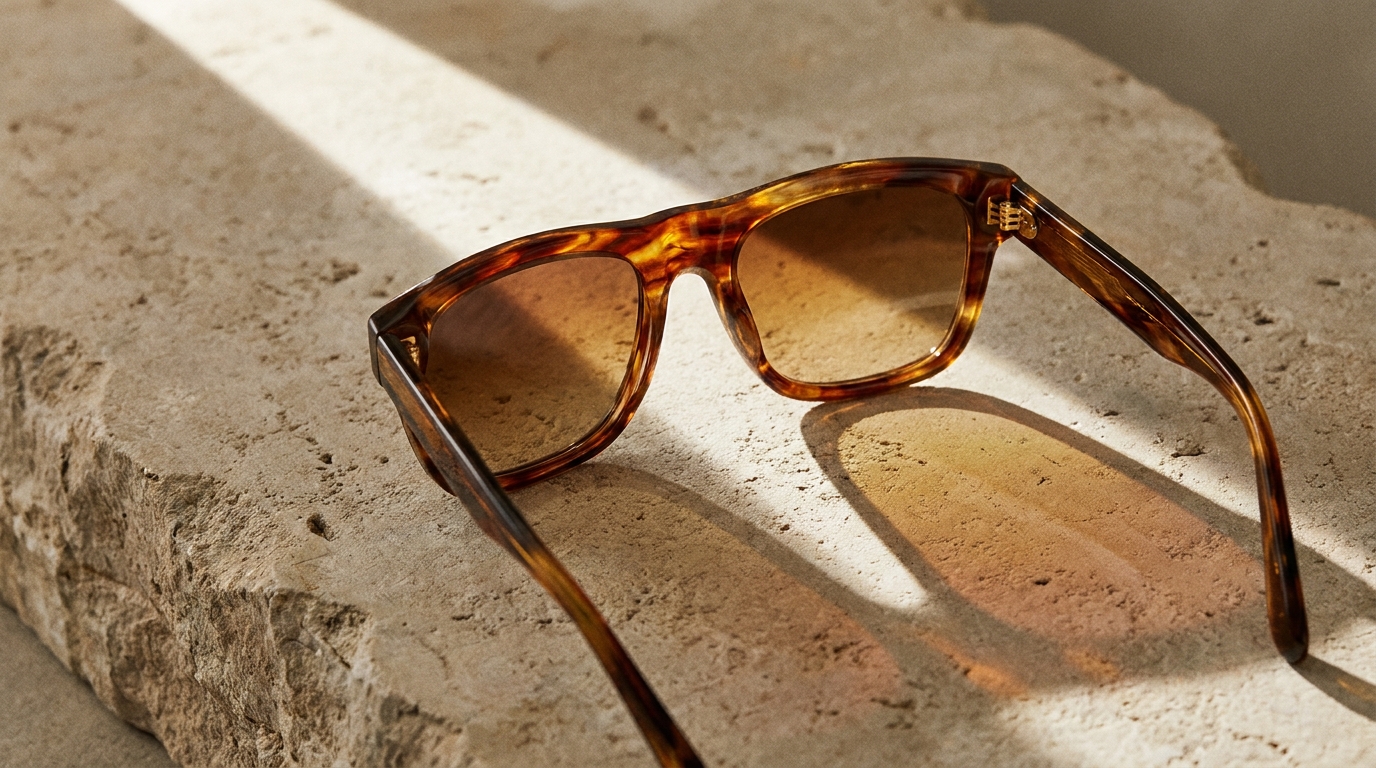
The Double-Surface Glare Trap in Eyewear Photography
An eyeglass lens is a dual-surface optical curved element: light bounces off the front convex curve and the rear concave curve simultaneously. In a studio, flashes create blinding white crescents across the glass that obliterate the customer's view of tinted gradient hues or polarized finishes.
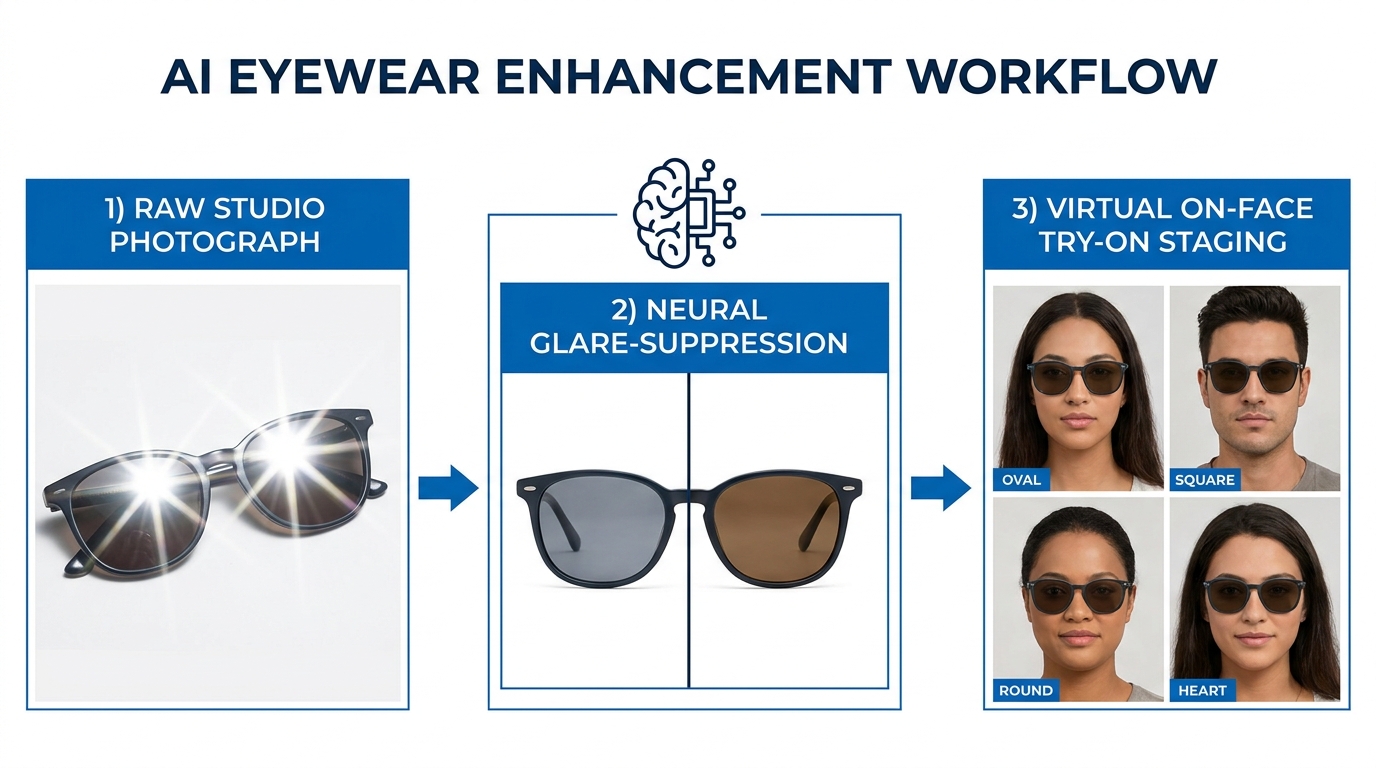
To combat this physically, commercial photographers must construct complex cross-polarization rigs—placing linear polarizing film sheets over every strobe and a circular polarizer on the camera lens. Even with expensive rigs, anti-reflective (AR) lens coatings create purple, magenta, or green chromatic flares that require hours of meticulous Photoshop cloning.
Modern generative platforms like SocialShot's AI Photoshoot Studio de-contaminate lens reflections automatically: mathematically separating the ambient environment from the underlying lens gradient tint, frame acetate translucency, and metal hinge detailing.
Eyewear Visual Production Methods Compared
Examine how traditional cross-polarized studios, WebAR face filters, and generative AI eyewear engines perform across visual fidelity and conversion metrics:
| Production Vector | Cross-Polarized Studio Rig | WebAR 3D Face Filters | SocialShot Generative Eyewear AI |
|---|---|---|---|
| Cost per SKU (Packshot + Model) | $120 – $280 per frame | $2,000+ 3D mesh CAD modeling | $0.35 – $0.90 per completed asset |
| Lens Glare & Gradient Fidelity | High manual post-cleanup needed | Flat cartoonish lens opacity | Sub-pixel gradient & polarized depth |
| Acetate Material Realism | Picks up studio reflection hot spots | Artificial polygon edges | Lustrous tortoiseshell & horn translucency |
| Model Face Diversity | Limited to hired models (1–2 faces) | Requires customer webcam interaction | Full spectrum of face shapes & skin tones |
| Return Rate Mitigation | Low (Cannot judge fit on different faces) | Moderate (Distorted smartphone cameras) | High (-26% return reduction via clear scale) |
The 4 Core Visual Assets for High-Converting Eyewear PDPs
To overcome online purchasing hesitation, an eyewear product page must guide the buyer through four distinct visual angles:
- The 45-Degree Elevated Hero: Displays the front frame contour while simultaneously showcasing temple arm thickness, barrel hinges, and wire-core engraving.
- The Pure White Frontal Packshot (RGB 255): Meets Amazon and Google Shopping compliance, clearly communicating total bridge width, lens height, and frame symmetry.
- The Macro Temple & Hinge Detail: An ultra-close zoom highlighting hand-polished bevels, custom five-barrel hinges, and premium acetate grain.
- The Multi-Face On-Model Showcase: Displays the frames on diverse human models (oval, square, heart, and round face shapes), helping shoppers find their exact match without guessing.
Best Practices for Capturing Frames for AI Processing
Follow these simple steps when photographing eyewear for seamless AI enhancement:
- Clean Thoroughly with Lens Solution: Remove every fingerprint smudge from both sides of the lenses before shooting. Dried skin oils refract light and degrade clarity.
- Level the Frame Horizontally: Ensure both temple tips touch the ground plane evenly so the glasses do not appear crooked or misaligned in the final render.
- Diffuse Your Key Light: Use large softboxes placed slightly above and behind the glasses to create soft rim lighting along the top acetate browline without blowing out the front.
How does AI remove reflections from sunglass lenses without erasing the tint?
AI isolates the lens surface layer, distinguishing unwanted studio reflections from the true underlying tinted gradient. It suppresses hot spots while retaining the accurate density, color transition, and mirror coating.
Can AI show my sunglasses on different human face shapes?
Yes. Using SocialShot's virtual brand model generator, you can render your frames on various face shapes (round, oval, square, diamond) with realistic ear and bridge resting points.
Will AI distort the proportions or millimeter sizing of my glasses?
No. The software locks frame geometry, bridge width, and temple arm angles into an unchangeable reference mask, ensuring that dimensional accuracy is preserved.
Can AI generate realistic acetate textures like tortoiseshell?
Yes. AI models recognize the depth and translucency of cellulose acetate, highlighting internal amber marbling and wire core details under directional sunlight.
How does showing eyewear on models affect ecommerce return rates?
Data across eyewear brands shows that presenting frames on realistic models reduces return rates by up to 26% by providing shoppers with accurate visual scale and face-proportion context.
Can I generate editorial campaign photos for seasonal collections?
Yes. You can place your sunglasses into sun-drenched Mediterranean coastal villas, alpine ski chalets, or modern urban cafe settings in seconds without location budgets.
Elevate Your Eyewear Brand with Glare-Free AI Staging
Stop letting lens glare and model casting costs limit your catalog. Produce pristine, high-converting eyewear packshots and diverse on-face lookbooks with SocialShot.