AI Product Photography Examples and Use Cases: Across 6 Major Industries
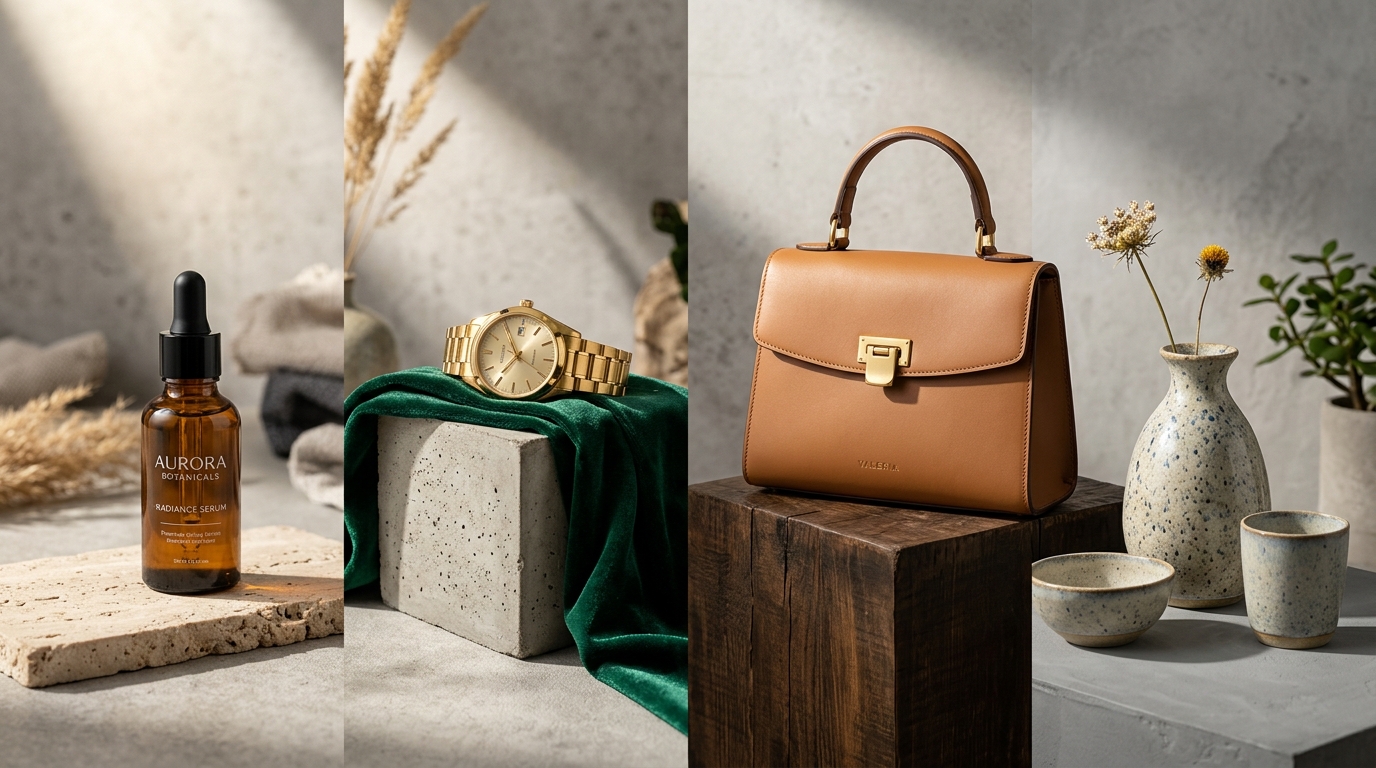
When online shoppers visit a product detail page, they aren't just looking at technical specifications; they are trying to imagine how that physical object will fit into their everyday lives. A plain cut-out on a pure white background proves the product exists, but it fails to communicate scale, tactile materiality, or emotional aspiration.
Until recently, staging contextual lifestyle photography required hiring set designers, sourcing props, renting boutique locations, and managing lengthy production schedules. Today, AI product photography allows merchants to generate photorealistic, commercially styled scenes around their real physical goods in seconds.
This guide explores practical, high-converting examples and use cases across six major product categories, detailing the exact scene styling formulas, surface materials, and lighting techniques that turn basic product shots into compelling commercial assets.
Why Static White Backgrounds Are No Longer Enough
Extensive ecommerce usability research from the Baymard Institute confirms that shoppers rely heavily on lifestyle imagery to evaluate three critical factors that sterile white background photos cannot convey:
- Contextual scale: Placing a handbag on a restaurant table or displaying a face serum next to a drinking glass gives shoppers immediate, intuitive visual understanding of real-world dimensions, dramatically reducing return rates caused by unexpected sizing.
- Materiality and finish: Soft directional window lighting reveals subtle paper grain, leather pebble texture, or fabric drape far more effectively than flat, sterile light box illumination.
- Brand positioning: Placing the identical artisan candle on rough, unpolished concrete creates an edgy, industrial aesthetic; placing it on polished Italian marble with fresh botanicals commands a luxury premium price point.
Leading direct-to-consumer brands no longer view photography as a one-time catalog requirement. Instead, they deploy dynamic imagery across paid social ad testing, seasonal email promotions, and localized marketplace listings.
6 Industry-Specific Examples and Scene Styling Strategies
Different product categories require fundamentally different environmental staging to resonate with buyers. Here is how modern brands leverage AI photography across six leading verticals:
1. Cosmetics, Skincare, and Beauty
Beauty and wellness imagery relies on evoking purity, hydration, and organic efficacy. The most successful AI staging setups combine natural geological elements with controlled fluid dynamics:
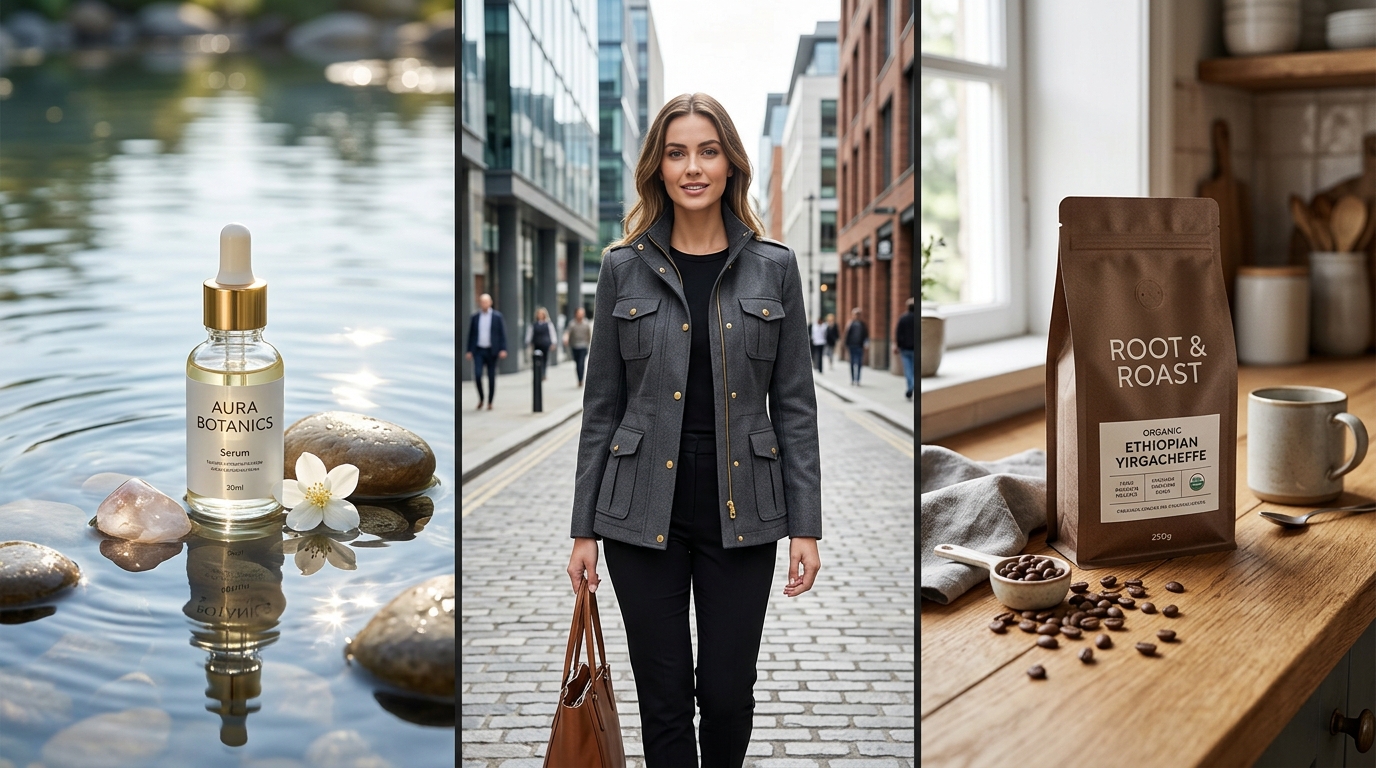
- Travertine and water ripples: Staging amber dropper bottles or frosted glass jars on submerged stone pedestals surrounded by gentle water caustics and diffused morning sunlight.
- Botanical shadow casting: Simulating palm fronds or olive branch shadows falling softly across a warm beige cyclorama wall, reinforcing natural, organic ingredient messaging.
- Minimalist podium composition: Elevating skincare sets on smooth geometric plaster blocks with sharp, elegant contact shadows that convey clinical sophistication.
2. Fashion, Apparel, and Footwear
Clothing is notoriously difficult to sell through flat-lay photos alone because shoppers cannot visualize how fabric drapes across human anatomy. AI fashion photography transforms flat product images or ghost mannequins into live-model shots:
- Urban street style: Rendering an oversized bomber jacket or denim piece on an athletic model walking down an authentic European cobblestone street or modern glass architecture backdrop.
- Studio editorial lookbooks: Staging dresses, blazers, and knitwear against clean colored seamless backgrounds with high-fashion directional lighting and natural posing.
- Diverse demographic representation: Showcasing the identical garment across multiple model ethnicities, age ranges, and body types without booking multiple casting calls, ensuring diverse customer segments see themselves represented in your catalog.
For an end-to-end operational breakdown of garment workflows, consult our guide to AI-generated fashion photography.
3. Jewelry, Watches, and Luxury Accessories
Macro goods with reflective metals and faceted gemstones present unique optical challenges. In a physical studio, shooting jewelry requires polarizers, light diffusers, and hours of post-retouching to eliminate camera reflections:
- Deep jewel-toned velvet: Staging gold rings and timepieces on lush emerald, navy, or charcoal velvet drapery, allowing warm metallic specular highlights to pop with high contrast.
- Raw organic slate & river stones: Contrasting delicate silver necklaces or titanium watches against coarse, matte basalt stone to emphasize precision engineering.
- Subtle mirror reflections: Rendering polished luxury goods on dark reflective glass with soft depth-of-field blur in the background.
4. Packaged Food, Coffee, and Specialty Beverages
Food and beverage marketing requires triggering sensory appetite appeal. Staging packaged goods in sterile isolation feels clinical; staging them in active culinary environments drives hunger and desire:
- Morning breakfast countertop: Placing artisan coffee bags on a rustic butcher block next to a steaming ceramic mug, scattered whole roasted beans, and a linen dish towel.
- Golden hour alfresco picnic: Staging canned craft beverages or gourmet condiments on an outdoor wooden table with soft dappled tree canopy shadows and natural greenery.
- Ingredient storytelling: Framing hot sauces or spice rubs alongside fresh whole ingredients (garlic heads, sliced chilies, sea salt crystals) on dark slate.
5. Home Goods, Candles, and Ceramic Decor
Home goods require spatial harmony. Shoppers want reassurance that an item will enhance their personal living spaces:
- Warm residential vignettes: Placing handcrafted scented candles on a mid-century modern credenza next to hardbound art books and a textured ceramic vase.
- Sunlit architectural nooks: Showcasing throw blankets, pillows, or tableware in bright minimalist Scandinavian interiors with neutral walls and warm hardwood floors.
- Cozy evening ambiance: Simulating low-light evening settings with a soft flame glow reflecting on nearby surfaces, conveying relaxation and warmth.
6. Consumer Electronics and Desk Accessories
Tech accessories (headphones, chargers, keyboard mats, phone cases) demand an aesthetic of clean organization, productivity, and ergonomic design:
- Minimalist creator workspace: Positioning wireless earbuds or chargers on a solid walnut desk mat next to an aluminum laptop and a sleek potted succulent.
- Futuristic studio lighting: Suspending tech products above dark matte podiums with subtle cyber-cyan or warm tungsten rim lighting that highlights industrial chamfered edges.
Comparison Matrix: Category Styling & Commercial Impact
The table below summarizes optimal staging environments, conversion goals, and technical watch-outs across categories:
| Product Category | Recommended Staging Surface | Primary Conversion Goal | Key Technical Watch-Out |
|---|---|---|---|
| Skincare & Beauty | Travertine stone, water ripples, neutral plaster | Evoke hydration, pure formulation, and luxury | Preserve transparent glass refraction & readable label text |
| Apparel & Fashion | On-model city street, editorial cyclorama studio | Demonstrate fit, drape, and aspirational lifestyle | Ensure realistic anatomical interaction & accurate garment seams |
| Jewelry & Watches | Jewel-tone velvet, raw basalt, subtle mirror glass | Highlight metallic luster, precision, and prestige | Avoid blown-out specular highlights on faceted gems |
| Food & Beverages | Rustic butcher block, outdoor patio, dark slate | Trigger sensory appetite appeal & ingredient context | Maintain crisp packaging typography & barcode boundaries |
| Home Decor & Candles | Mid-century credenza, sunlit window sill, oak shelf | Demonstrate spatial scale & cozy living ambiance | Align shadow angles with simulated window light source |
| Consumer Electronics | Walnut desk mat, dark matte podium, clean workspace | Convey ergonomic quality, sleek design, and utility | Keep clean straight-line perspective without optical distortion |
High-Impact Commercial Use Cases Beyond the Product Page
While product detail pages (PDPs) are the obvious destination for commercial imagery, forward-thinking brands use AI product photography to unlock high-leverage growth channels:
- Rapid Meta & TikTok Ad Creative Testing: Performance ad campaigns suffer from creative fatigue within weeks. Instead of running the same photo until click-through rates decline, marketing teams can generate 5 distinct aesthetic variations of a hero product (e.g., minimalist pastel, outdoor nature, luxury evening) to identify which visual hook yields the lowest customer acquisition cost.
- Seasonal and Holiday Campaign Rotations: Rather than organizing costly holiday photoshoots every autumn, brands can stage their existing evergreen inventory on festive seasonal backdrops (autumn leaves for Thanksgiving, subtle pine needles and warm fairy lights for Q4, fresh pastels for spring) with zero lead time.
- Email Marketing and Homepage Hero Banners: Generating widescreen 16:9 lifestyle compositions with negative space specifically reserved for marketing typography, discount badges, and call-to-action buttons.
How to Implement Multi-Category Visuals with SocialShot
SocialShot's studio platform makes staging multi-category visual collections straightforward and affordable. By selecting from curated commercial studio presets—including pastel cycloramas, natural stone surfaces, and realistic lifestyle models—you can generate campaign-ready assets in under 30 seconds.
For catalogs with dozens of SKUs, bulk product photography allows you to apply a unified styling preset across your entire inventory simultaneously, guaranteeing consistent lighting, angles, and color fidelity across your storefront.
Explore creative scenes for your product category
Generate studio-grade product photos, on-model lifestyle images, and high-converting ad visuals with SocialShot AI.
Frequently Asked Questions
Can I generate photos for multiple different product categories in one account?
Yes. SocialShot supports a wide array of physical categories, including apparel, footwear, jewelry, cosmetics, packaged consumer goods, and home accessories. The AI engine dynamically adapts its segmentation and shadow modeling to match the physical material of your input object.
How do I ensure multi-angle consistency when staging a product across different views?
Capture your reference photos of the front, side, and 45-degree angle under identical physical lighting on your desk. When generating in SocialShot, apply the exact same scene preset to all three inputs so the background surface, key light angle, and color temperature match seamlessly across your image carousel.
Will AI-staged lifestyle images increase conversion rates on Shopify?
Yes. Ecommerce benchmark testing consistently shows that pairing a clean white-background listing hero with two to three contextual lifestyle images increases add-to-cart rates by 15% to 30% by helping shoppers visualize scale, quality, and practical everyday use.
Can I place text and marketing banners over AI-generated scenes?
Yes. When generating scenes for ad creatives or email headers, you can choose compositions that leave intentional negative space on the left or right side, providing a clean, uncluttered background for discount text, logos, and promotional typography.
How does the AI handle transparent liquids or perfumes?
Advanced alpha matting models isolate the glass container's specular highlights while preserving the semi-translucent liquid inside. The diffusion model renders the simulated background through the liquid with realistic optical refraction consistent with glass physics.
Do I need technical prompting skills to generate high-end scenes?
No. While you can input custom descriptive text prompts, SocialShot offers pre-engineered, commercially tuned studio presets (such as Marble Pedestal, Warm Minimalist Interior, and Urban Editorial) that deliver consistent, professional lighting at the click of a button.